If you are applying for a PCO medical test in East London, you can do it through specialised PCO licensing centres in the area or driver clinics in and around East London with GMC-registered doctors. TfL’s current policy lists several separate requirements for new PHV applicants, including the medical declaration, enhanced DBS, English-speaking/listening test, SERU assessment, and topographical skills assessment.
For many applicants, the medical test is also the most misunderstood part of the process. What exactly does the examiner check? Do you need a specialist, or will your regular GP do? And how does the medical fit into your wider PCO application timeline?
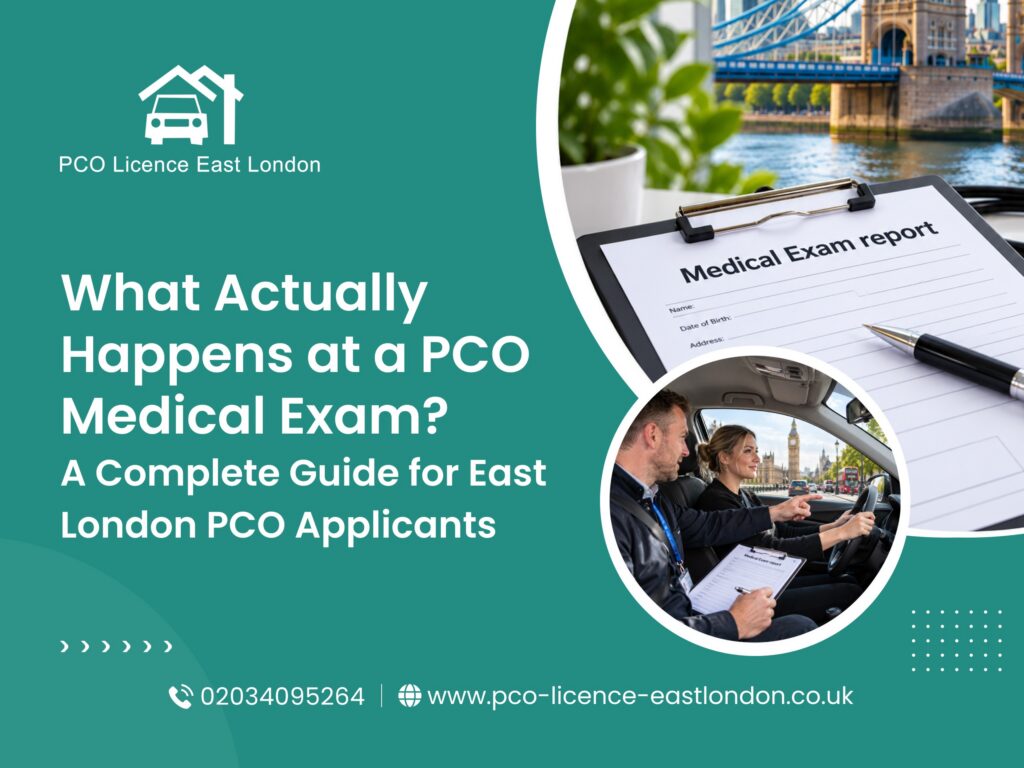
This guide walks through the PCO medical test in East London step by step, so you know exactly what to expect before you book.
The Purpose Behind the PCO Medical Test?
The PCO medical test — sometimes called the TfL PCO medical test — exists to confirm you’re fit to drive professionally.
TfL requires all private hire driver applicants to meet the DVLA Group 2 medical standard, which is the same standard used for bus and lorry drivers. It’s a higher bar than the standard Group 1 car licence, because you’ll be responsible for passengers for extended periods on the road.
In practice, this means the examiner is checking things a routine car licence never asks about: your cardiovascular health, vision in more detail, and certain medical conditions that could affect your ability to drive safely over long shifts. TfL’s own guidance points applicants toward the DVLA’s Group 2 medical standards as the reference document, and it’s worth a read before your appointment if you have any pre-existing conditions you’re unsure about.
Who Needs a PCO Medical in East London
Not every applicant needs a fresh medical. TfL exempts you from submitting a new medical form if you:
- already hold a full or provisional DVLA Group 2 licence, or
- have an active PCO application with a completed medical, and you’re under 45.
If you’re over 45 or your last medical was more than 3 years ago, you’ll need to complete a new one. This also applies if you’re subject to an age-related medical requirement. We’ve covered the exemption rules in more detail in a separate guide, since it’s genuinely worth checking before you pay for a medical you might not need.
For most first-time applicants, though, the medical is a required step. Therefore, it’s worth understanding what actually happens at the appointment.
What Happens During the Exam, Step by Step
A PCO medical appointment is more thorough than a standard GP check-up, but it’s not something to be nervous about. Here’s roughly what to expect:
- Paperwork first. You’ll need to complete a medical questionnaire covering your medical history, including past and current conditions, medications, and any relevant hospital treatment. Be accurate here; the examiner needs your full history to sign off correctly.
- Vision test. You’ll be checked against the visual standards required for Group 2 drivers, which are stricter than the standard car licence requirement.
- Blood pressure and cardiovascular check. This is a key part of the Group 2 standard, given the extended hours professional drivers spend behind the wheel.
- General physical examination. Basic mobility, hearing, and any conditions that could affect safe driving.
- Review and sign-off. If everything meets the required standard, the examiner completes the medical form, which becomes part of your PCO licence application in East London.
Most appointments take between 20 and 40 minutes, though this can vary depending on your medical history and whether the examiner needs to review previous records.
What to Bring to Your Appointment
To avoid delays, bring:
- Photo ID
- Glasses or contact lenses, if you wear them, along with your prescription
- A list of any medications you currently take
- Details of any relevant medical conditions or past surgeries
- If you’re renewing, your previous medical certificate or records, where available
Turning up prepared is genuinely the single biggest factor in whether your appointment goes smoothly, far more than which examiner you choose.
Finding a PCO Medical Examination Near You in East London
Searching “PCO medical examination near me in London” will bring up plenty of options, but not all examiners are equally familiar with the Group 2 standard TfL requires. A few things worth checking before you book:
- Experience with Group 2 assessments specifically: Some GPs rarely see Group 2 applicants and may take longer to process the paperwork correctly or may be less confident advising on borderline cases.
- Whether they understand PCO/TfL documentation requirements: The form itself has specific fields TfL expects to be completed in a particular way. This will be easier and faster for an examiner who is accustomed to reviewing PCO applications.
- Appointment availability that suits your schedule: Particularly if you’re balancing this around existing work.
This isn’t about finding someone who can get you licensed faster. TfL processes every application through the same channel regardless of which examiner you use. It’s about finding someone who does the medical correctly the first time, so your form doesn’t come back with queries that cost you weeks later on.
What the Medical Costs and How Long Results Take
TfL doesn’t set a fixed fee for the medical — the cost is set by the examining doctor, so it’s worth checking the price before you book rather than assuming a standard rate. Once completed, the signed medical form is submitted as part of your PCO application; there’s no separate “result” that arrives later, so as long as the form is filled out correctly and meets the standard, this part of your application moves forward with the rest.
How the Medical Fits Into Your Wider PCO Application
The medical is one piece of a PCO licence application in East London. TfL processes new applications in the order they’re received and existing drivers’ renewals in order of licence expiry, so there’s no way to jump the queue by completing any single step faster.
What you can control is making sure every part of your application is accurate and complete the first time. Incomplete or incorrectly filled forms are among the most common reasons applications are delayed, and the medical form is no exception.
This is where the guidance of a specialist PCO licencing centre in London genuinely helps: not by speeding up TfL’s process, which no third party can do, but by making sure you’re not the applicant whose file sits waiting for a missing signature or an unclear answer on a medical questionnaire.
If You Don’t Pass, or Get a Conditional Result
If a medical condition raises a question mark, it doesn’t automatically mean you can’t be licensed. TfL assesses medical fitness against the DVLA Group 2 guidelines, and some conditions may still be compatible with a licence depending on how well-managed they are or with further information from your specialist.
If you’re ever unsure about how a condition might affect your application, it’s worth discussing it with your GP before you apply, and reviewing the DVLA’s published Group 2 guidance to understand what’s being assessed and why.
How We Support You Through the Process
At PCO Licence East London, we help applicants understand exactly what TfL requires at every stage of the application, including the medical, so nothing gets missed or filled in incorrectly.
TfL processes every application through the same system, in the same order, regardless of who you book your medical or training with. What we do offer is clear, accurate guidance so your application moves through that system without unnecessary delays caused by avoidable errors.
If you’re preparing for your PCO medical in East London and want a clear steer on what to expect, get in touch, and we’ll talk you through it.
FAQs
Your own GP can complete a PCO medical as long as they’re comfortable assessing against the Group 2 standard. Some applicants prefer an examiner more familiar with PCO/TfL paperwork specifically, simply to reduce the risk of errors on the form.
There’s no fixed fee. TfL leaves this to the examining doctor, so prices vary. It’s worth confirming the cost when you book.
Only if you’re over 45, or your last medical was completed more than three years ago. Otherwise, you may be exempt. Check the specific renewal exemption rules before booking.
Typically 20–40 minutes, depending on your medical history.
It depends on the specific finding. Some conditions can still meet the Group 2 standard with additional information or specialist input. When in doubt, talk to your GP and check the DVLA’s Group 2 guidelines.